


قرصان المعرفة
RageTeam
When I tried قرصان المعرفة, I quickly understood that its appeal is not just knowing obscure facts. It turns each question into a small contest between memory, attention, and timing. This is a free trivia game from RageTeam, aimed at Everyone, and it works best when I treat it as a quick shared challenge rather than a serious study tool. The questions cover broad subjects, so a strong player in one area can still be surprised by the next round.
That mix makes it especially interesting on a shared phone or tablet. I can imagine leaving the device on a kitchen table while two people take turns answering, or passing it around during a short break. The game is easy to understand without a long explanation, but the competitive element gives ordinary questions more energy. Its average rating of 4.3 from around 600 ratings suggests that many players have found the central idea enjoyable, while the more modest review count means I would still judge it by the actual experience rather than by popularity alone.
How the game feels in a shared household
The most natural use case for me is a short household session. One person opens the game, another watches the question, and everyone reacts when an answer feels obvious or unexpectedly difficult. Because the subject matter is general and varied, the same group does not need identical interests. Someone who enjoys history may be balanced by another player who is quicker with science, language, entertainment, or everyday knowledge.
A realistic evening might look like this: after dinner, one family member has a few minutes before leaving, while someone else wants a quick game without learning complicated rules. This is where the title makes sense. It can fill a small gap without demanding the commitment of a long strategy game. The speed element also means that discussion naturally becomes part of the entertainment. People compare instincts, defend an answer, and remember the questions that caught them off guard.
That convenience has a trade-off. A shared device is not the same as a dedicated multiplayer table, and the experience depends on how the people present agree to take turns. I would not assume that every session will feel perfectly organized. If several people answer at once, the competitive value can become unclear. For a calmer group, the game is easier to enjoy when one person acts as the device holder and everyone follows an agreed order.
Related News






One useful habit is to decide before starting whether the goal is winning or simply seeing how many questions the group can solve together. That small distinction prevents arguments when somebody answers quickly or when the screen is passed around unevenly. In my experience, the game is more welcoming when the first session is treated as a social quiz, with competition added only after everyone understands the pace.
What the first session tells you
The opening experience is less about mastering a system and more about discovering how the group reacts to uncertainty. Some players enjoy answering immediately, while others want a moment to reason through the choices. A household with mixed confidence levels should avoid turning every mistake into a judgment. Trivia is naturally uneven: a child may know an answer that an adult misses, and a casual player may outperform someone who considers themselves knowledgeable.
This is also where I noticed the importance of reading carefully. In a fast question game, people often lose not because they lack knowledge but because they rush past a qualifier or interpret the wording too quickly. I recommend slowing down for the first few questions, identifying exactly what is being asked, and only then deciding whether speed is worth the risk. That approach makes the game more satisfying and gives less experienced players a fairer chance.
Gallery
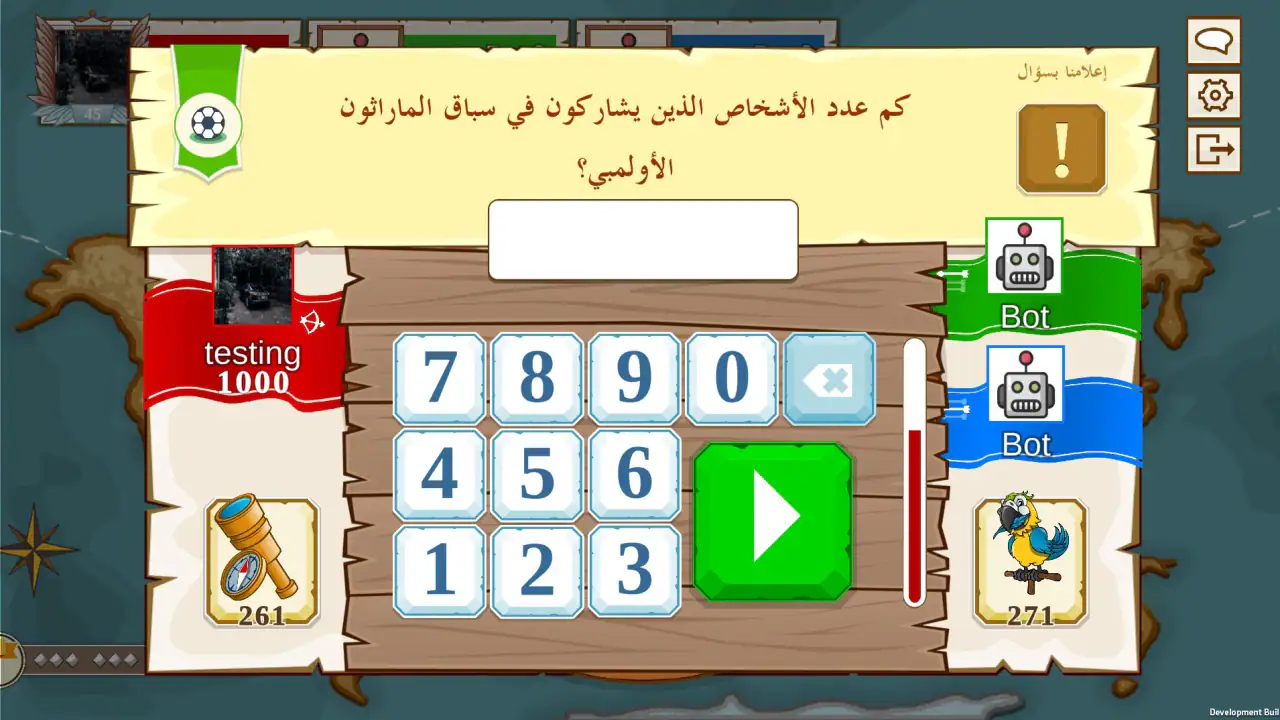
Keeping accounts and identities clear
On a shared phone, I would establish simple boundaries before anyone begins. The game is free to download and play, but it includes in-app purchases ranging from $2.99 to $164.99 per item. That is the most important household detail to discuss. A child or guest should not be left to explore purchase screens without an adult deciding what is acceptable. I would keep the device holder aware of any transaction step and avoid treating the game as if “free” automatically means there can never be a charge.
I would also separate the idea of a player’s performance from the identity of the person using the device. If several people take turns, say whose turn it is aloud and keep the order consistent. This is not a built-in family-management feature; it is simply a practical routine that prevents confusion. If the game presents progress or results during play, the group will understand them better when everyone knows which person is answering.
For a household that shares one device between adults and children, I prefer a short, visible session over leaving the game open for unsupervised browsing. This keeps the activity social and makes it easier to stop when the device is needed for something else. It also avoids a common problem with shared entertainment: one person quietly continuing while everyone else assumes the session has ended.
The current version is 1.4.4, and the minimum operating-system requirement is Android 6.0. That makes the game accessible to many older Android devices, which is useful if the household keeps a spare phone or tablet for casual use. Still, compatibility on paper does not guarantee that every older device will feel equally comfortable. Screen size, battery condition, and general responsiveness can affect a game built around quick decisions.
Coordinating turns without making the game feel formal
I found that the best coordination method is deliberately simple. Choose a fixed order, let the device holder read the question clearly, and give each participant the same chance to respond. If the group wants a stronger competitive atmosphere, keep a handwritten tally rather than interrupting the flow to debate every result. The game itself supplies the questions; the household supplies the structure.
This arrangement is particularly helpful when a younger player is involved. Adults often answer faster simply because they are more comfortable guessing, not necessarily because they know more. Giving everyone a short pause before the final response makes the contest less about shouting first. It also turns the game into a useful exercise in careful reading and reasoning without pretending that it is an educational curriculum.
Another practical tip is to stop while the group is still enjoying the questions. Trivia games can become repetitive when every participant is tired and mistakes start to feel personal. A brief session with lively discussion is better than stretching the game until nobody is listening. Since the core attraction is the variety of questions, leaving some curiosity for the next session helps preserve that feeling.
If the household prefers cooperation, players can discuss an answer before committing. That changes the experience from a speed contest into a shared knowledge puzzle. I think this is the better starting point for families with a wide age gap. Once everyone understands the wording and rhythm, the group can try individual turns or stricter timing if that adds fun rather than pressure.
Age rating, trust, and the meaning of “Everyone”
The Everyone content rating makes the game a reasonable candidate for a household where adults and younger players share entertainment. I would still use ordinary parental judgment. An age label can describe the intended content level, but it does not decide whether a child is ready for competition, unfamiliar topics, or the frustration of getting answers wrong. The social setting matters as much as the rating.
For younger children, I would play alongside them at first. That gives an adult a chance to explain unfamiliar words, show how to reason from the question, and notice whether the pace is comfortable. It also makes it clear that not knowing an answer is normal. A trivia game can build confidence when mistakes are treated lightly, but it can become unpleasant when adults use every question to prove superiority.
Trust also matters around purchases. Because the game is free but offers paid items, I would make the household rule explicit: nobody buys anything without asking the device owner. That conversation is more useful than assuming a child will understand the difference between a free installation and optional spending. It also protects the shared-device relationship, where one unexpected transaction can make everyone less willing to share games in the future.
I would be more cautious about recommending it to someone who wants a completely private, distraction-free learning tool. The broad questioning and competitive pace are designed for entertainment. A student preparing for a specific exam would be better served by a focused revision app, because general trivia cannot replace a planned syllabus. Likewise, a player who dislikes time pressure may prefer a slower quiz format where answers can be considered without the feeling of a race.
How it compares with familiar trivia alternatives
Compared with a traditional quiz book, this game is more convenient for spontaneous play. There is no need to prepare questions or carry a stack of pages, and the device can move from one participant to the next. The disadvantage is that a book makes it easier to choose a precise subject, adjust the difficulty manually, or let a moderator control the pace. I would choose the game for variety and immediacy, and a book for deliberate themed practice.
Compared with a large online multiplayer quiz platform, this title feels better suited to a small, informal group using one device. Big platforms may offer more elaborate presentation, larger communities, or stronger event-style competition, but they can also bring more distractions and a steeper learning curve. Here, the attraction is the direct question-to-answer loop. If a player wants a social network around trivia, this may feel limited; if they want a quick household challenge, that simplicity is a strength.
It also differs from flashcard apps. Flashcards reward repetition and planned recall, while this game rewards flexible knowledge, quick interpretation, and the ability to handle subjects that change without warning. I would not use it as a replacement for memorization practice. I would use it as a way to test whether knowledge can be retrieved under mild pressure, or simply as a more active alternative to scrolling.
The planning element is easy to underestimate. Even when the question is familiar, deciding whether to answer immediately or spend another moment checking the wording can matter. That creates a small layer of judgment beyond raw knowledge. Players who are naturally fast may have an advantage, but careful players can improve by learning when speed helps and when it creates avoidable mistakes.
Where the experience can become frustrating
The biggest limitation is the tension between speed and fairness. A player with a quick reaction can appear stronger than someone who knows the answer but needs time to phrase it or confirm it mentally. In a mixed household, this can make the game feel unbalanced unless the group agrees on how turns work. I would not recommend using the results as a serious measure of intelligence.
Another limitation is the breadth of the subject matter. Variety keeps the game fresh, but it also means that individual questions may land far outside a player’s interests. Someone who wants only sports, cinema, geography, or one academic field may find the general approach too scattered. The same feature that helps a group find common ground can disappoint a specialist looking for depth.
There is also the practical issue of shared-device fatigue. Passing a phone around is enjoyable for a small group, but awkward when many people are waiting. A tablet can make the arrangement more comfortable, while a small screen may encourage people to crowd together or miss details. This is not a flaw in the questions themselves, but it changes how well the game fits a household’s physical setup.
I would skip it if my priority were a fully controlled family environment with detailed profiles, carefully managed learning paths, or extensive parental tools. The verified age rating is reassuring, but an age rating is not the same thing as a complete household-management system. Families that need those controls should choose a platform built around them rather than expecting a trivia game to provide them.
Who gets the most from it
This is at its best as a low-preparation group game. It suits friends sharing a break, relatives looking for a quick activity, and curious players who enjoy moving between subjects. It is also a good fit for someone who wants to turn a spare few minutes into active thinking instead of passive screen time. The free entry point makes trying it straightforward, while the broad question style gives a group more chances to find an area where someone can shine.
I would recommend it less strongly to a solo player who needs a very deep progression system or a precise training plan. The appeal comes from the interaction between question, timing, and reaction. Playing alone can still be worthwhile, especially for testing personal knowledge, but it may not deliver the same energy as a shared session. In that case, a specialized quiz or study app may provide clearer long-term goals.
It is also not ideal for a household that wants every game to be quiet and interruption-free. The best moments come from talking, comparing answers, and laughing at unexpected misses. If that sounds annoying rather than entertaining, a single-player puzzle with no time pressure would probably be a better choice.
My household verdict
After spending time with it, I see قرصان المعرفة as a friendly, accessible trivia game whose real value appears when people share the same device and agree on a fair rhythm. RageTeam keeps the central idea easy to grasp: answer varied questions, think quickly, and use judgment instead of relying only on memorized facts. The game’s free price and Everyone rating make it easy to consider for a mixed household, but the in-app purchase range means adults should set clear spending boundaries before handing over the device.
Its strongest qualities are spontaneity, variety, and the way it creates conversation from simple questions. Its weaker points are the unevenness that comes with general trivia, the possible unfairness of pure speed, and the inconvenience of coordinating several people around one screen. Those are manageable if the group treats it as a shared activity rather than an official test.
With over 100 thousand installs, it has already reached a meaningful audience, and its 4.3 average gives it a credible starting point for curious players. I would install it for short household sessions, casual gatherings, or a quick mental change of pace. I would not choose it for exam preparation, detailed parental management, or a highly structured solo learning routine. For the right group, though, it turns ordinary downtime into a lively contest where knowledge matters, but knowing when to slow down matters too.
FAQs for قرصان المعرفة
What is قرصان المعرفة and what can users do with it?
قرصان المعرفة is an educational knowledge app designed to help users explore information through questions, answers, and interactive challenges. During testing, its main appeal was the quick access to general-knowledge content in a game-like format. It can be useful for students, trivia fans, and anyone who wants to learn casually, although the available topics and depth may vary depending on the app version.
Is قرصان المعرفة free to download and use?
The app may be available to download at no initial cost, but users should check the current Google Play or App Store listing before installing because pricing, advertisements, and optional purchases can change. Some features, question packs, or advanced content may require payment. It is also worth reviewing the store description and in-app purchase details to understand what is included in the free version.
Does قرصان المعرفة require an internet connection?
An internet connection may be needed for downloading the application, updating content, synchronizing progress, displaying advertisements, or accessing online features. Certain questions or previously loaded sections may work offline, but this should not be assumed for every part of the app. If you plan to use it while traveling, test the main features without Wi-Fi or mobile data first.
Is قرصان المعرفة suitable for children and students?
قرصان المعرفة can be suitable for children, teenagers, and students who enjoy learning through quizzes, but parents should check the recommended age rating and review the content before allowing younger users to play. Educational quality can differ between categories, and some questions may be difficult or occasionally simplified. Parents should also examine advertisements, permissions, external links, and any purchase options.
What permissions and privacy considerations should users know about?
Before installing قرصان المعرفة, users should review the permissions requested by the Android or iOS version and read the developer’s privacy policy. A quiz application generally should not need access to sensitive information unrelated to its functions. Pay attention to requests involving personal data, device identifiers, notifications, or account details, and avoid providing unnecessary information unless it is clearly required for a specific feature.
Pros
- Offers engaging educational content in a quiz-style format.
- Can help users review general knowledge in short sessions.
- Suitable for casual learning and entertainment on mobile devices.
- May encourage friendly competition through scores or rankings.
- Simple gameplay makes it accessible to a broad range of users.
Cons
- Question difficulty and accuracy may vary between categories.
- Some features may require an internet connection to work properly.
- Advertising can interrupt gameplay or reduce the overall experience.
- The content may become repetitive after extended play sessions.
- Availability and quality of language support may be limited.


